Drug License In UP: Apply, Documents, And Fees
The Pharmaceutical market is one of the largest industries globally. According to a report, it provides 20% annual return, making it one of the most profitable investment places. If you want to invest in this highly profitable market by start manufacturing or selling of drugs. Then you need to register for the Drug License in UP.
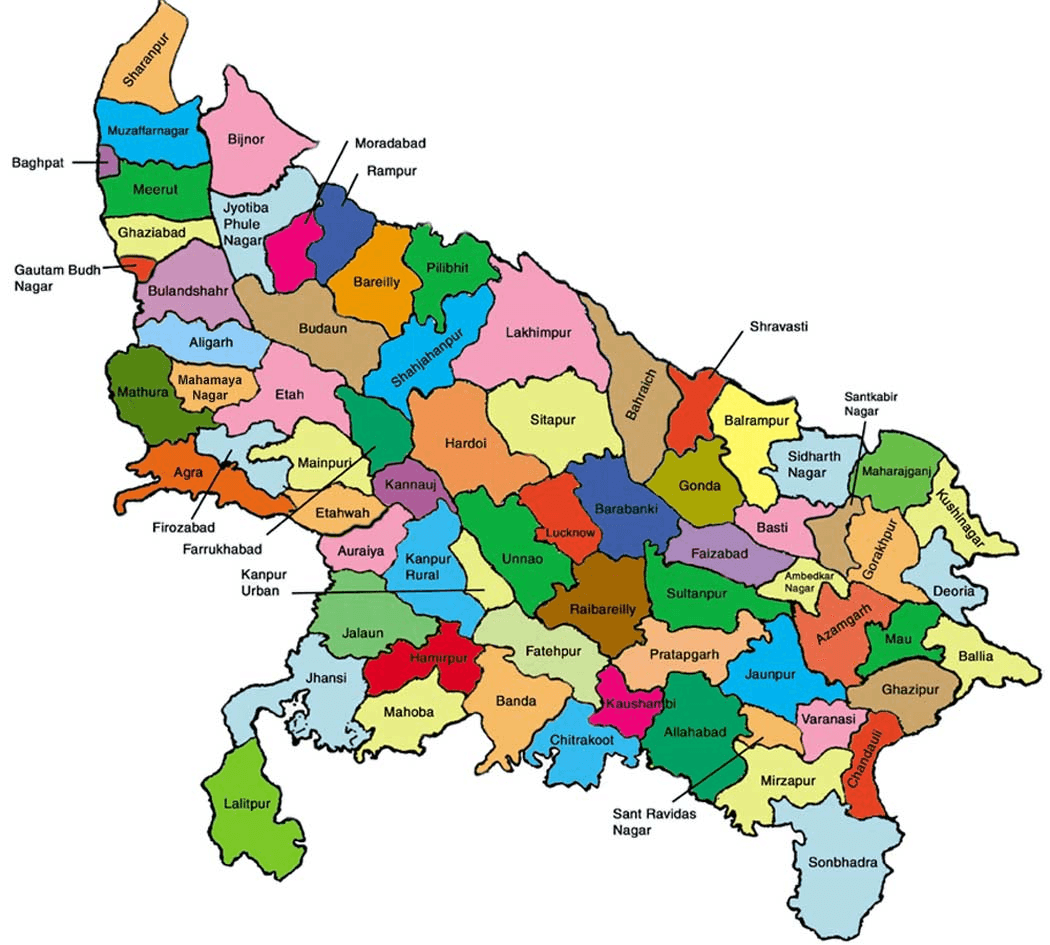
You can not operate legally without a proper certified drug license in Uttar Pradesh. The Drugs Act, 1940, has made having a drug license mandatory in Uttar Pradesh to Start and operate the Pharmaceutical industry of any kind, including Ayurvedic & Unani Drugs, and Medical device registration.
Connect with Druglicense.in to obtain a food and drug license UP hassle-free.
Why Drug License In UP Important?
There are several reasons why one must obtain a drug license that ensure public safety and business reputation:
Legal Compliance
It is a mandatory legal requirement that means operating a pharmaceutical business without a legitimate license is a punishable offence.
Public Safety
This licensing system regulates the industry so that fake, substandard, and harmful drugs do not circulate, thereby protecting the public's health.
Business Credibility
Trust and reliability are fostered by a valid license among suppliers, healthcare professionals, and customers, assuring them that drugs are of good quality and genuine.
Accountability
It provides a mechanism to legally respond for the drugs manufactured and sold, and therefore ensures that authorities can easily hold the correct entity accountable when problems arise.
Avoid Penalties
Licenses relieve businesses of the extreme negative consequences of the law, such as harsh monetary fines, imprisonment, and permanent closure of the business.
Business Growth
A license is often a prerequisite for supplying medicines to large institutions such as hospitals and other governmental health programs and state public health programs, opening up significant business opportunities.
Obtaining a UP Drug license online will become an easy process with the expert assistance of Druglicense.in team.
Types Of Drug Licenses In UP Provided By Us
A variety of different licenses will be required based on the type of pharmaceutical operation. However, these are the types of Drug licenses provided by Druglicense.in:
MD 42 License
A manufacturing license is issued to businesses that manufacture, sell, stock, exhibit, or distribute medical devices, including In-Vitro Diagnostic Devices.
Sale License
A sale license applies to the sale of drugs and is categorised into two main types.
Retail Drug License (RDL):
Required for pharmacies and chemist shops selling medicines directly to consumers.
Wholesale Drug License (WDL):
Needed for distributors selling medication in bulk to retailers, hospitals, or any licensed institution.
Druglicense.in professionals can help you with applying UP Drug license online.
Benefits Of Obtaining A Drug License In UP
Legal Authorization:
This provides the formal right to engage in the pharmaceutical business while safeguarding the owner from any legal claims.
Enhanced Reputation:
This improves perception among clients and business associates, indicating that the business is maintaining compliance and adhering to quality standards.
Market Access:
This provides the opportunity to legally access and purchase medicines from certified manufacturers and distributors and enables them to participate in tenders for the distribution of drugs to hospitals and government bodies.
Quality Assurance:
Licensing regulates good practices of storage and record keeping, thereby ensuring quality assurance of medicines.
Business Scalability:
Licensing also provides the basis for business growth with new outlets or expansion into manufacturing or wholesale.
Eligibility Criteria For Drug license In UP
The applicants must meet certain conditions regarding the premises, the storage, and the personnel:
Space Requirement:
For a retail or wholesale license: Minimum of 10 sq. m.
For combined retail and wholesale license: Minimum of 15 sq. m.
Clear height of premises must conform to the National Building Code of India, 2005.
Storage Facility:
The premises must have adequate storage facilities such as a refrigerator and air-conditioner for storing drugs that need special temperature conditions, such as vaccines, sera and insulin.
Qualified Personnel
For Retail License:
Requires a registered pharmacist who has either a Diploma in Pharmacy (D.Pharm) or Bachelor of Pharmacy (B. Pharm).
For Wholesale License:
Operations must be supervised by a "competent person" who is either a graduate with at least one year of experience in drug sales or an undergraduate with at least four years of experience.
Eligibility Criteria for the MD42 license In UP
Eligible Business Entities
The following entities are eligible to apply for an MD-42 License:
Proprietorship Firm
Partnership Firm
Limited Liability Partnership (LLP)
Private Limited Company
Public Limited Company
The entity must be legally registered and possess a valid GST registration.
2. Premises Requirements
The applicant must have a commercial premises approved for medical device storage and distribution.
Minimum area requirement:
Retail / Wholesale Medical Device Unit: Minimum 10 sq. meters
Combined Operations: Minimum 15 sq. meters
The premises must comply with the National Building Code and local municipal regulations.
Clear demarcation of:
Storage area
Dispatch area
Office or administrative area
3. Storage & Infrastructure Requirements
Adequate storage space to prevent damage, contamination, or deterioration of devices.
Mandatory facilities:
Refrigerator (especially for temperature-sensitive devices)
Air Conditioner to maintain a controlled room temperature
Proper shelving, racks, and labelling systems.
Compliance with manufacturer-recommended storage conditions.
4. Personnel / Authorised Person Requirements
Appointment of a Responsible Person / Authorised Signatory to oversee operations.
The person must:
Be authorised through a board resolution or authorization letter
Have adequate knowledge of medical device handling and regulatory compliance
A registered pharmacist is NOT mandatory for the MD-42 License.
5. Device Classification Eligibility
Applicants must clearly identify the risk class of medical devices intended to be handled:
Class A & B: Low to moderate risk (State Licensing Authority)
Class C & D: Moderate-high to high risk (CDSCO – Central Authority)
6. Regulatory & Compliance Conditions
Applicant must not have been convicted under:
Drugs & Cosmetics Act, 1940
Medical Device Rules, 2017
Compliance with:
Storage and distribution norms
Record-keeping and traceability requirements
Willingness to allow inspection by:
Drug Inspector
CDSCO officials (if applicable)
7. Quality & Certification Requirements (If Applicable)
ISO 13485 certification may be required for certain devices.
Additional approvals or test reports may be demanded based on the device's nature.
Documents Required for Drug license In UP
The documentation varies according to the kind of license, either for sale (retail/wholesale) or for manufacturing.
1. For Sale Licenses (Retail and Wholesale)
The following documents are usually required in the application (both for retail and wholesale):
Application & Fees: Completed application form (e.g. Form 19 for Allopathic drugs) along with the challan/receipt of fee payment.
Business Entity Documents: Documents related to the firm's constitution, such as the Certificate of Incorporation, MOA, and AOA for a company, or the Partnership Deed for a partnership firm.
Personal Documents: ID and address proof (PAN card, Aadhaar card, etc.) of the proprietor, partners, or directors need to be submitted.
Premises Documents:
Evidence of ownership (such as a sale deed) or a rental/lease agreement for the premises.
Site plan and key plan (blueprint) of the premises.
Evidence of adequate storage facilities, such as the purchase invoice for a refrigerator and air conditioner.
Affidavits:
Affidavit of non-conviction from the proprietor, partners, or directors under the Drugs & Cosmetics Act, 1940.
Affidavit from the employed Registered Pharmacist or Competent Person.
2. Additional Documents for Retail License
In addition to the general documents, you'll need to provide the following documents when applying for a retail license:
Proof of Qualification: Final degree or diploma certificate in Pharmacy (B.Pharm/D.Pharm) along with mark sheets.
Registration Certificate: Valid registration certificate issued by the State Pharmacy Council.
Appointment Letter and Bio-data.
3. Additional Documents for Wholesale License
Documents for the Competent Person are needed for the wholesale license:
Proof of Qualification: Degree or diploma certificate.
Experience Certificate: at least one year of experience for a graduate or four years for a non-graduate in dealing with drugs.
Appointment Letter and Bio-data.
Documents Required for the MD-42 License in UP
To avoid objections or delays, the following documents must be prepared and uploaded correctly:
1. Application & Business Documents
System-generated MD-42 application form
Challan/receipt of government fee payment
Constitution of the firm:
Company: Certificate of Incorporation, MOA, AOA
Partnership: Partnership Deed (notarised)
Proprietorship: Proprietor declaration
GST Registration Certificate
2. Premises Documents
Ownership proof (Sale Deed / Conveyance Deed / GPA) OR
Rent Agreement along with the ownership proof of the landlord
Site plan and key plan (layout of premises)
Photographs of premises (storage area, entrance, refrigerator, racks)
3. Storage & Infrastructure Proof
Purchase invoice of Refrigerator (mandatory)
Purchase invoice of Air Conditioner
Undertaking for compliance with storage temperature norms
4. Personnel / Authorised Signatory Documents
ID proof (Aadhaar / PAN) of proprietor / partner / director
Authorisation letter for the signatory
Bio-data of the responsible person
5. Affidavits
Affidavit of non-conviction under the Drugs & Cosmetics Act, 1940
Declaration of compliance with Medical Device Rules, 2017
Undertaking regarding storage and distribution practices
Steps To Apply for A Drug License In UP
The application process is now online in most states and follows these steps:
Online Portal Registration:
The applicant must first register on the official state drug licensing portal to obtain a User ID and Password.
Application Filing:
Log in and complete the appropriate online application form.
Document Upload:
Scan and upload the required documents in the specified format (typically 100 dpi, black and white) as per the instructions.
Fee Payment:
Pay the prescribed application fee via the online portal.
Premises Inspection:
After submission of the application, a Drug Inspector will be assigned to conduct a physical inspection of the premises to verify the particulars and ascertain compliance with all of the requirements.
Scrutiny and Grant of License:
Once the inspector issues a satisfactory report and all documents have been assessed, the Drug Controller will approve the application and issue the drug license. Applicants will often be informed of the outcome via SMS upon approval or rejection.
Application Forms For Sale Licenses
| License Purpose | Application Form |
|---|---|
| Retail sale of Allopathic Drugs( not in Sch C, Cl, X) | Form 19 |
| Retail Sale of Restricted Allopathic Drugs | Form 19A |
| Wholesale of Allopathic drugs (not in Sch C, C1, X) | Form 19 |
| Retail Sale of Homoeopathic medicines | Form 19B |
| Retail Sale of Drugs in Schedule C&C (1) | Form 19 |
| Wholesale of Drugs in Schedule C&C (1) | Form 19 |
| Retail or Wholesale sale of Drugs in Schedule X | Form 19-C |
Application Form for Medical Device License
| License Purpose | Application Form |
|---|---|
| Sale / Stock / Distribution of Medical Devices | MD-41 |
| Grant of License for Medical Devices | MD-42 |
Fee Structure For Drug License
Government fees for a drug license vary depending on the type of license. The approximate fee structure is:
Retail or Wholesale License: ₹3,000.
Restricted License (for general drugs): ₹1,000.
License for Schedule X Drugs: ₹500 (additional).
Manufacturing License: ₹7,500 (plus any late inspection fees).
Renewal Fee: Same amount as the original license fee.
MD-41: The government fee depends on the risk classification of the medical device.
The Renewal Process of Drug License In UP
If you miss the expiry date, you have to pay a late fee. If you delay too long (usually 6 months post-expiry), the license is cancelled, and you have to apply for a fresh one—a nightmare scenario involving fresh inspections.
Step-by-Step Drug Licence Renewal Online:
Log in to the Portal: Use the same user ID as the initial application.
Select 'Renewal': Click on the link for drug licence renewal online against your license number.
No-Change Affidavit: You generally need to upload an affidavit stating there has been no change in the constitution, premises, or staff during the tenure.
Submit Renewal Fee: Pay the renewal fee online.
Validity Extension: Upon payment and verification, the validity of your drug licence certificate is extended in the database. You might still have to make a physical visit to collect the new receipt acts as proof of renewal.
Timelines
It usually takes between 30 and 60 days to get a drug license after applying, depending on the completion of documentation and the inspection schedule.
Penalties
If drugs and cosmetics are not in compliance with the Indian Drugs and Cosmetics Act of 1940, serious penalties will apply:
Selling Drugs Without a License:
This is a punishable offense which can lead to imprisonment for a term of 1-3 years and a fine of at least ₹5,000.
Manufacturing/Selling Adulterated Drugs:
The penalties are much more severe for these types of offences:
Selling adulterated drugs has a 1-3 year imprisonment and a minimum fine of ₹1 lakh.
Death or serious bodily injury by an adulterated drug has a minimum punishment of 10 years or life in prison, and a minimum fine of ₹10 lakh.
Other Consequences:
Non-compliance can also result not only in the confiscation of the entire stock of medicines, but there may be heavy penalties, permanent cancellation of the license and total restriction from carrying on any pharmaceutical business.
Why Choose Us?
Hiring us for your Drug license registration in Uttar Pradesh will make your application process easy and decrease the chances of rejection. With us, you will get assurance in:
Drug License Application:
Complete assistance for the procurement of your Retail, Wholesale, or Manufacturing Drug License under the Drugs & Cosmetics Act, 1940.
Regulatory Compliance:
We ensure that your pharmacy or facility maintains complete compliance with all regulatory requirements related to storage, record-keeping, and operations.
Documentation Support:
Our experts will assist in the preparation and verification of all the required affidavits, blueprints, and personnel documents for a zero-error submission.
Liaison with Government Depts:
We coordinate with the State Drug Control Department to facilitate timely inspections and approvals for your license.
Renewals & Audit Support:
Feel empowered knowing you are receiving timely assistance for all your renewals and support during regulatory audit processes to ensure your business remains compliant year-round.
Ready to Get Started?
Let our expert team handle your drug license application process from start to finish.
FAQS
Q1. What is a drug license?
Ans. A drug license gives you the ability to operate a drug, medicine, or cosmetic business in accordance with the Drugs and Cosmetics Act. Such a license is granted by the Central or State Drug Standard Control Organisation in accordance with the Drugs and Cosmetics Act of 1940.
Q2. Who needs a drug license in India?
Ans. All manufacturers as defined by the Drugs and Cosmetics Act 1940 that deal with ayurvedic, allopathic, cosmetics, pharmaceuticals, etc.
Q3. What are the qualifications for obtaining a drug license?
Ans. With a focus on clinical pharmacology or microbiology, a graduate degree in pharmacy, pharmaceutical sciences, or medicine from an Indian institution founded by law is required. Additionally, two years of experience in the production, testing, regulation, or design of medical devices are required.
Q4. How long is a drug license valid for?
Ans. The cost of a license to manufacture pharmaceuticals is now set at Rs 6,000 for a duration of five years. A fee of Rs 1,500 will also be applied for the confirmation of the premises before a license is granted or renewed.
Q5. Who controls drugs in India?
Ans. The National Regulatory Authority (NRA) of India is the Central Drugs Standard Control Organisation (CDSCO), which is housed under the Directorate General of Health Services, Ministry of Health & Family Welfare.
Q6. What is Form 21B for a drug license?
Ans. Permission to sell and stock medications listed in Schedule C & C (1) of the medications & Cosmetics Act and Rules is granted to wholesalers via Form 21B.
Q7. What is the purpose of the MD 42 certificate?
Ans. An MD 42 license is issued by the State Licensing Authority to retailers, wholesalers, and stockists. This certificate allows them to sell, stock, exhibit, or distribute medical devices, including in vitro diagnostic instruments.
Q8. What is a wholesale medical device (md 42) license in India?
Ans. In India, a Medical Device License is issued by the Central Drugs Standard Control Organisation (CDSCO). To register specific medical devices with an Indian counterpart, the CDSCO uses the MD 41 form. This license is required for wholesalers who sell medical devices to the country.